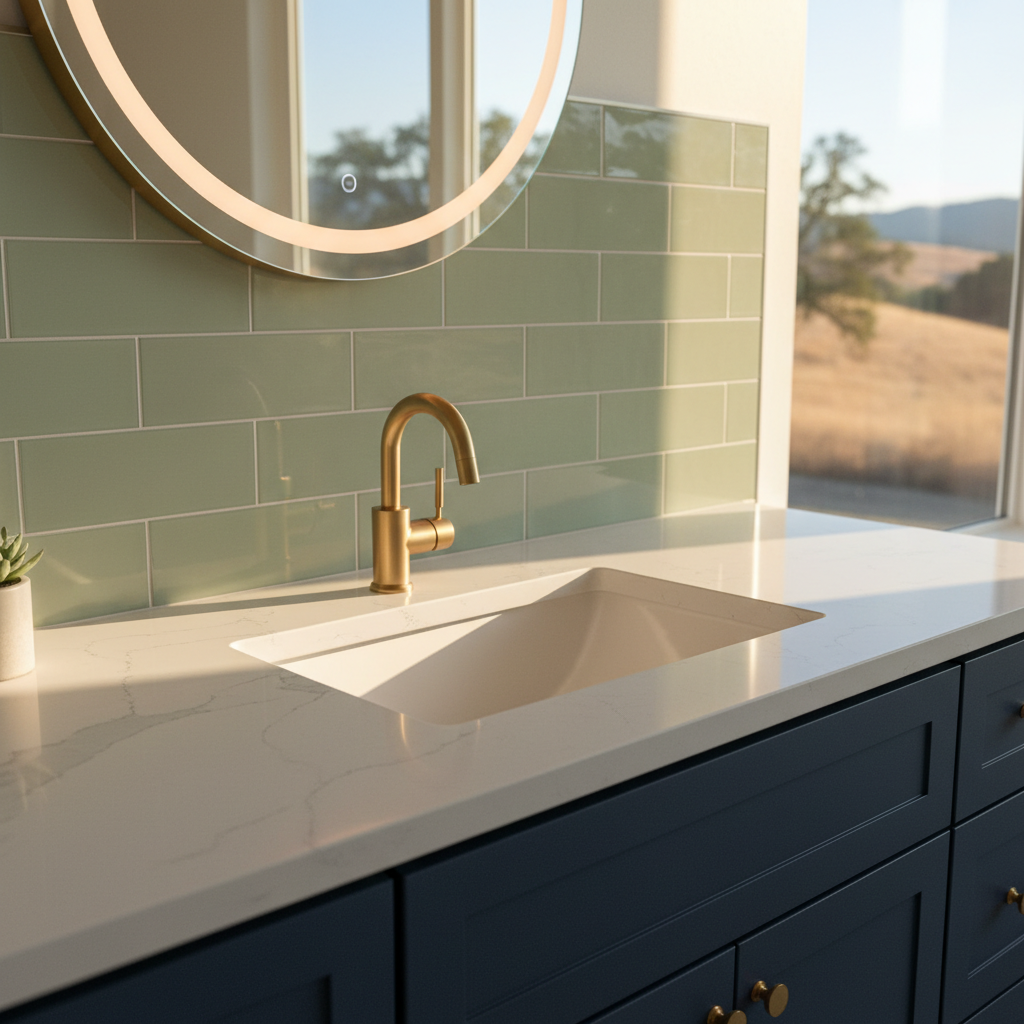
Alright, let's talk bathroom vanities and sinks. It's one of those projects that seems straightforward on the surface, but once you start digging, you realize there are a bunch of details that can trip you up. I get a lot of similar questions from folks right here in Folsom, so I figured I'd lay out the answers to the most common ones. No fluff, just what you need to know.
What's the difference between a vanity, a pedestal sink, and a console sink?
Good question, because they all serve the same basic purpose but are totally different beasts. A vanity is basically a cabinet with a countertop and a sink integrated into it. It gives you storage space underneath, which is a big plus for most homes. You've got everything from small 24-inch powder room vanities to big double-sink setups for master bathrooms.
A pedestal sink is just what it sounds like: a sink basin sitting on a pedestal. It's elegant, takes up less visual space, and can really open up a smaller bathroom. The catch? Zero storage. You'll need to figure out shelving or a medicine cabinet elsewhere for your toiletries.
A console sink is kind of a hybrid. It's a basin with legs, often with an open shelf or towel bar underneath. It offers a bit more surface area than a pedestal and can look really sharp, but still not much in the way of enclosed storage. It's a good choice if you like the open look but want a little more functionality than a pedestal.
How do I know what size vanity will fit in my bathroom?
This is critical. Don't just eyeball it. You need to measure the width of the wall where the vanity will go. But it's not just the wall-to-wall measurement. You also need to consider door frames, shower enclosures, and toilet placement. You need at least 15 inches from the center of the toilet to any obstruction on either side, and that includes the vanity. So, if your toilet is tight against a wall, that limits your vanity width significantly.
Also, think about depth. Standard vanity depth is 21 inches, but you can find shallower 'space saver' options around 18 inches deep, which are great for small powder rooms or tight hallways. Don't forget to account for the faucet – you need enough space behind it once it's installed.
Can I install a new sink on my existing vanity?
Sometimes, yes! If your existing vanity is in good shape and you just want to update the look, you can often swap out the sink and countertop. The key is making sure the new sink's dimensions and drain placement match up reasonably well with the existing cabinet and plumbing. If you're going from a drop-in sink to an undermount, you'll definitely need a new countertop because the cutout will be different.
If you're keeping the countertop, measure the existing sink's cutout carefully. You'll need a new sink that fits that opening or one that's slightly larger to cover it. It's usually easier to go with a similar style (e.g., drop-in for drop-in) if you're reusing the countertop. If you're replacing both, well, the world's your oyster.
What kind of plumbing changes might I need for a new vanity or sink?
This is where things can get a little tricky. If you're replacing a vanity with another vanity of similar size and location, often the existing water supply lines and drain will work just fine. You might need new supply lines if the old ones are corroded or the new faucet requires different connections, but that's usually a simple swap.
However, if you're moving the vanity's location, changing from a single to a double sink, or switching to a pedestal or console sink, you're almost certainly looking at plumbing modifications. Pedestal and console sinks have exposed plumbing, so you'll need to make sure the shut-off valves and drain trap look good and are positioned correctly. Sometimes, especially in older Folsom homes with their original plumbing, the drain might be too high or too low for a modern vanity's drawers, requiring some re-piping inside the wall. That's a job for a pro, no doubt about it.
How long does vanity and sink installation usually take?
For a straightforward replacement of a vanity and sink in the same spot, with no major plumbing changes, it can often be done in a single day. That includes removing the old unit, assembling the new vanity (if it comes flat-packed), installing the countertop and sink, hooking up the faucet, and connecting the drain.
If there are plumbing modifications, wall repairs, or if you're adding a backsplash or new flooring, it's going to take longer. A full day, maybe two, depending on the complexity. If you're hiring us at Aim High Bathroom Solutions, we'll give you a clear timeline upfront after we've seen the space.
Do I need to worry about the wall behind the vanity?
Absolutely. When you remove an old vanity, you might find some surprises. There could be old paint lines, damaged drywall, or even mold if there's been a slow leak over the years. It's a good idea to plan for some drywall repair and painting. If you're installing a new vanity that's smaller than the old one, you'll definitely have exposed wall that needs attention.
Also, make sure the wall is structurally sound. A heavy vanity needs to be securely anchored to wall studs, not just drywall. We always recommend finding the studs and using appropriate fasteners to prevent any wobbling or tipping down the line.
Getting a new vanity and sink can really transform a bathroom. Just make sure you're thinking through these details before you start ripping things out. It'll save you headaches down the road.